
Reviews since May 2025
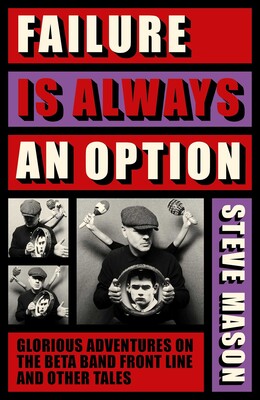
After I graduated, living in London, the Beta Band were one of my favourite bands and Steve Mason was the founding member. Their music had an edge. It was unusual, surreal in places and inventive in a DIY kind of way. They didn’t sound like anyone else which was refreshing in the Brip Pop era. They received much critical acclaim for their breakthrough EPs – my introduction to them came when they compiled them – and went on to release three memorable albums, although Steve didn’t rate the first and was outspoken about that – and reflects on that in here. “Failure Is Always An Option” by Steve Mason (New Modern, 2026) starts like any other autobiography really; growing up, early jobs, making friends. He writes about how the band formed and secured a deal with a major and there are lots of tales of debauched behaviour. He speaks about his long-term mental health issues and how this impacted his behaviour while in the band. I think he’s light on detail about how they made the music and although he touches on the side projects after the band split – King Biscuit Time and Black Affair – you don’t get anything about his solo stuff, most of which I’m really keen on! If you were a fan, and you enjoy rock and roll memoirs, I think you’ll enjoy this book. Nathan Davidson (Jul 2026)

At some point, we need to discuss the deep Australian roots of Progressive Rock. Daevid Allen, a founding member of both Soft Machine and Gong, is the obvious example but from Philip F. Marks’ informative new book, “Cosmic Surfer: The Musical Journey of Phil ‘Shiva’ Jones” (Singsong Music, 2026), I am now aware that Quintessence had not one but two members from down under. I nearly fell off my chair when I read that Phil ‘Shiva’ Jones, the generally shirtless lead singer of Quintessence, was also Phil Jones of Phil Jones and the Unknown Blues Band, who had a 1967 hit in Australia with If I Had A Ticket. The funny thing is that you can hear something of Quintessence and, indeed, Phil’s subsequent career in this single. On the surface, it is a standard minor-key mod banger, but it has a hypnotic quality. Marks explains why this might be. And yes, there is an Australian element! If Quintessence didn’t exist, David Keenan would have to make them up. Into the lysergic landscape of late 1960s Ladbroke Grove, in an ashram above a chip shop, this band emerged and was immediately signed by Island Records. They played in Hyde Park with Edgar Broughton in September of 1969, featured at the first two Glastonbury festivals, and opened for Creedence at Royal Albert Hall. Jim Morrison was a fan. A trip to America and a gig at Carnegie Hall were somehow scuttled, but if you’d been asked who the contenders were in 1970, Quintessence might have come to mind. Marks charts all of this and Jones’ astonishing post-Quintessence life as a musician, teacher and healer. The book presents the story chronologically but focuses on the various elements – drone, improvisation, breath – that made Quintessence a unique act in a period that valued originality and experimentation and which continue to inform Jones’ work. I rate books about music purely on how many times I have to stop and listen to a song or an album. Plenty for this one! Tony Thompson (Jul 2026)

“Jumpin’ Jack Flash: David Litvinoff and the Rock’n’Roll Underworld” by Keiron Pim (Vintage, 2017) is an outstanding study of a remarkable, but until now wholly elusive figure. Meticulously researched and elegantly written, Pim’s work is the first to bring us the story of David Litvinoff, that real-life Zelig of post-war British bohemia. And via the magnesium flare of his subject’s story, Pim illumines the multifaceted world through which he moved: East End gangsters, Chelsea aristos, Soho artists and Notting Hill hippies. Litvinoff, for so long the missing piece of so many cultural jigsaws, finally gets a story of his own and it’s even more bizarre than one might have hoped. This will be an indispensable read for anyone who appreciates that mad, alluring, myth-filled world.” Jonathon Green, author of ‘Days in the Life: Voices from the English Underground’
“A kaleidoscopic ride through the acid-fields of Fities and Sixties London in search of David Litvinoff, a brilliant, desolate, unforgettable yet hard-to-focus gay Jewish grifter. Ironic stereotype and rebel at once, Litvinoff chars the car-crash societies he moves through. Mick Jagger, Lucian Freud and the Kray twins flash past in the throng, all sustained by drugs, sex, art, film and a great deal of rock’n’roll. Litvinoff is dazzling. Pim’s pilgrimage is appropriately and meticulously dazzled.” George Szirtes, King’s Gold Medal for Poetry 2024

“The Man Who Was Screaming Lord Sutch” by Graham Sharpe (Aurum Press, 2005). Screaming Lord Sutch committed suicide in 1999 at the age of 58 but although he lived on the periphery of fame for nearly forty years not much was ever known or documented about him. Yet, conversely, he was an endless self-publicist; playing the media to his advantage was his talent – actually his best talent. Having known of him since his earliest record releases in the pre-Beatles days, I was surprised to learn that he was still touring round small clubs with his seedy rock horror act right up to the end. His more well-known political career as the face of the Monster Raving Loony Party was just in addition to this, for it made him little or no money – usually the reverse as he regularly lost his deposit. Some people may have been under the impression, therefore, that he was a lord, an eccentric member of the aristocracy who could afford to go on losing. He wasn’t. He was born in humble circumstances in Hampstead in 1940 and his father died before he was two years old. He remained close to his mother for the rest of his life and her death in 1997 may have been a contributing factor to his own terminal depression. David Sutch was a likeable character and no one guessed that in private he was often fighting black moods. Several members of his backing band The Savages (Beck, Page, Blackmore etc.) went on to more illustrious careers while Sutch meanwhile ploughed on, always finding a booking somewhere for his act but never getting anywhere near a big hit record. Sutch was a one-off who copied his title originally from Screamin’ Jay Hawkins, an American who used skulls and voodoo props on stage. Strangely, the name of Screaming Lord Sutch may be remembered in a historical context over many others in British rock because of his political connections. Being a familiar face on television at almost all by-elections for the last forty years of the 20th century made him a household name and brought him a measure of fame far exceeding its worth. Even someone with a passionate interest in British politics would be hard pressed to remember the names and faces of an entire generation of members of parliament – let alone those candidates who were unsuccessful – yet they would probably all remember Screaming Lord Sutch. Paul F. Newman (May 2026)

Penny Kiley may not be a familiar name to most readers but “Atypical Girl” (Polygon) – her newly published autobiography – is an entertaining, fascinating rollercoaster of emotions. It also shines a spotlight on the importance of women in the Liverpool scene from the 70s onwards, much as Audrey Golden’s “I Thought I Heard You Speak” did for the Manchester scene. In 1977, Kiley arrived in Liverpool from Sittingbourne to study at the university just as punk was changing the rules of pop music. Within a few chapters, the author takes the reader inside Eric’s and introduces characters like Pete Wylie, Jayne Casey and Pete Burns. The Liverpool scene developed through and beyond punk in many directions as imaginary bands became real groups – Echo and the Bunnymen, OMD, The Teardrop Explodes, Dalek I Love You and more – and Kiley was there on the periphery documenting it all having established herself as a local correspondent for Melody Maker. As the book progresses through the years, Kiley documents the successes and failures of both the local music scene and her own personal life with wit, wisdom and honesty. Working for Melody Maker and the Liverpool Echo through the turbulent 80s and 90s, the book becomes a history of the city’s highs and lows, told with love for her adopted home. It’s not just music either; names like Adrian Henri, Alan Bleasdale and Willy Russell are frequently mentioned – Liverpool has always had a rich cultural heritage and Kiley was in a position to promote it through her works. There are a number of threads running through “Atypical Girl”. The first is about punk itself – what it meant in the 70s and how the attitude of punk can continue to influence your life choices decades later. The second is the need for connection – to be a part of ‘something’, whether it is a relationship with your partner, spreading the love for the music you enjoy, or a group of like-minded individuals. The third thread is about being true to yourself – discovering who you are. There are hints and signs throughout the book which lead to a revelation in the closing Afterword which had me cheering for joy. All I’ll say is I’ve been there too. Penny Kiley’s book is a beautifully written memoir which I would heartily recommend to anyone who has an interest in the Liverpool scene and sits comfortably alongside “Head On”, “Bunnyman”, “Revolutionary Spirit” and “45”. Now, how about a collection of her articles and columns for various magazines? Rob Morgan (Apr 2026)

The recently published “Wings: The Story of a Band on the Run” (Allen Lane) has given me a newly found respect for both Paul and Linda McCartney. For one of the most famous musicians in the world to experience what felt like an act of survival after the Beatles’ breakup, and to attempt to rebuild a band completely from scratch, both emotionally and creatively, is extraordinary. Linda McCartney’s resilience stands out. She ignored critics who slammed her for having the audacity to join a band led by one of the greatest songwriters of all time, while still learning to play herself. The early days of Wings were spent riding a relentless wave of criticism, with Paul’s early solo albums frequently dismissed, yet they pressed on regardless. Paul begins with his and Linda’s isolation on the Kintyre Peninsula and their intense focus on family life. It had always struck me as a romantic way of living, but the day-to-day details reveal a reality that was anything but. He then moves on to describe – in remarkable detail – driving up to universities and announcing they would play for 50p a ticket, often met with disbelief. It’s incredible to think of them performing in student unions across the country with their three young children playing at the side of the stage. Paul refused to play Beatles songs and so the band had to repeat songs within the same set as they only had enough material for half an hour. The subsequent 1972 ‘Wings Over Europe’ tour, carried out in a brightly painted 1953 double-decker bus with a top speed of just 38 miles per hour, its open top converted into a makeshift play area for the children, is just as crazy. The book charts Paul’s second rise to fame, once again built from basic beginnings. What shines through the most is Paul and Linda’s love for one another, their devotion to their family, and the sense that they were genuinely good, caring parents. The band looked after each other, quickly gelled, and built something real, unpretentious, and organic. It’s a fabulous read and an incredible story. Neil Waite (Apr 2026)

John Higgs begins his consideration of two of Britain’s most enduring cultural properties with a coincidence in their creation. With both Dr. No, the first Bond film and Love Me Do, the Beatles first single being released on the same day in October 1962, it allows him to consider both in tandem and their impact on British society across the following decades. By analysing the Beatles alongside the very different world of James Bond it allows for a very different take on such an already well-covered topic while considering what they say about Britain’s relationship with subjects such as class, politics and masculinity. In “Love And Let Die: Bond, the Beatles and the British Psyche” by John Higgs (Weidenfeld & Nicolson, 2022), Higgs argues that while they would continue to cross paths culturally the Beatles and James Bond represent two very different aspects of the British psyche. The Beatles, he says, represent love while Bond represents death. With that in mind it’s no surprise that the Beatles come out of the book looking better than 007, nor that Bond of course was no fan of the Fab Four himself. Higgs has consistently proven himself to be an excellent cultural historian and here he once again creates a very readable, well-argued book that showcases his ability to find new nuggets and anecdotes about even the most well covered topics. By finding interesting connections, unearthing new details and providing a wider cultural context, Higgs has produced a book that should have plenty to appeal to both aficionados of the Beatles or James Bond and those just interested in the impact of two British cultural behemoths. John Laking (Mar 2026)

A few years ago, on the long car journey from Sydney to Melbourne, I listened to the audiobook of Mark Fisher’s “Ghosts Of My Life”. The section on hauntological music caught my attention but I was unfamiliar with the Ghost Box label or artists such as Burial. I started thinking about the concept and how it might apply to music I did know. What popped into my head? Yup, Dr. John’s first album, Gris-Gris. David Toop is my current music writing hero. His 1995 book, “Ocean Of Sound”, changed my mind about all sorts of stuff, musical and otherwise. Thus, I was excited and intrigued when I came across his latest, “Two-Headed Doctor: Listening For Ghosts In Dr. John’s Gris-Gris” by David Toop (Strange Attractor Press, 2025) I felt as though I’d manifested it while driving down the Hume Highway. This is more than a book about the making of the album. It is a meditation on its deep historical and cultural sources. 350 pages on one album, even one like Gris-Gris, might sound extreme, but there is a lot to cover here. Voodoo, cultural appropriation, minstrelsy, New Orleans, and the original Dr. John, a 19th-century specialist in all things herbal. Each song is examined in detail, along with the cast of musicians who played on the record. Toop challenged my idea that the album’s sound came out of nowhere. Turns out there is a veritable playlist of proto Gris-Gris records. If you don’t agree, listen to Prince La La’s Come Back to Me. The oddest entry is Sonny Bono’s Pammie’s On A Bummer, recorded 48 hours before the first Dr. John session in the same studio, with some overlap in personnel. No, really! Toop also outlines the serendipitous circumstances that brought Mac Rebennack and Harold Battiste together in Gold Star Studios in LA and how, on Sonny Bono’s dime, the two cooked up something both mysterious and funky. This is the most satisfying book on music I’ve read in years. Tony Thompson (Mar 2026)
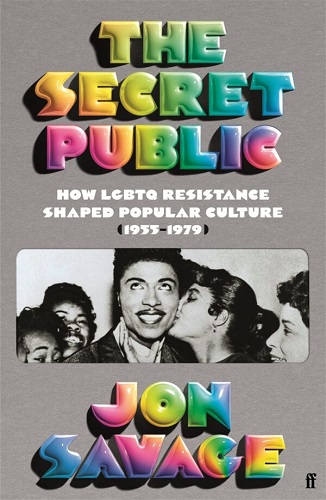
Pop music has always been queer. If you don’t think so, you haven’t been listening. Jon Savage’s “The Secret Public: A Queer History Of Pop” (Faber & Faber, 2025) shows how LGBTQ artists and audiences reshaped music from the inside out. The book is a masterclass in writing about music, with its blend of scholarly rigour and raw enthusiasm pulling the reader into stories of queer creativity that pulse with life. Across more than 700 pages, Savage reframes pop history entirely. Spanning 1955 to 1979, the book traces the emergence of queer visibility in an era when both legal and cultural forces sought to suppress it. Savage reveals how what became mainstream pop – its sounds, styles, and even its scandals – was profoundly shaped by LGBTQ pioneers. Little Richard’s ecstatic performances, Dusty Springfield’s vocal vulnerability, Lou Reed’s cryptic storytelling, and Sylvester’s unapologetic disco mark points on a continuum of queer influence stretching from the underground to the heart of popular culture. But Savage doesn’t just present the reader with an expertly researched archive. He writes with the urgency of someone who wants us to hear the pulse of queer creativity in every riff, lyric, and gesture. He evokes the thrill of Bowie’s shapeshifting, the shockwaves of disco liberation, and the coded defiance in songs that offered lifelines to those who recognised themselves within them. Being about pop, the book inevitably brushes against our own cultural memories. In 1977, an unknown Tom Robinson used to play at the Stapleton Tavern, just down the road from our North London squat. There were maybe a dozen of us in the audience each time, and – straight or gay – we’d all sing along to Glad To Be Gay. A year later, I was with the 100,000 people singing the same song when he headlined the Anti-Nazi League Carnival at Victoria Park. As Savage shows, queerness drove not only self-expression but also cultural solidarity and social change. “The Secret Public” is both a vital contribution to music history and a celebration of pop’s power to imagine freedom, often in the face of severe adversity. As Savage concludes: “It’s an inspiring story, but a cautionary one, as these battles will have to be fought all over again.” Mike Press (Feb 2026)
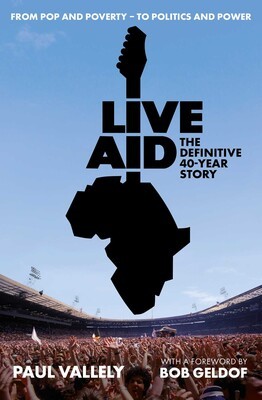
Live Aid was one of those ‘you remember where you were’ moments for my generation. There have been numerous books over the decades that have documented the day in detail. However, “Live Aid: The Definitive 40-Year Story” by Paul Vallely, with a foreword by Bob Geldof (New Modern, November 2025), goes further. It brings the event back into sharp focus, not just the spectacle but the context. The book’s granular detail around the lead-up to Geldof’s idea is as remarkable as the accounts of the famine’s horrors are devastating. Vallely’s book spans the four decades since, exploring global politics, corruption, and the ongoing humanitarian work that followed. The anecdotes from the day of the concert are fascinating, but it’s the before and after, the chain of events that set everything in motion and the legacy that continues, that are compelling. He introduces both villains and heroes but one hero stands above all. Claire Bertschinger, the British nurse working for the Red Cross in Ethiopia during the famine, wasn’t a journalist or an activist; she was simply there, on the ground, doing the impossible. In a feeding camp in Korem, Claire was forced to decide which children would receive food and which would inevitably be left to die, simply because there wasn’t enough to save everyone. Making these choices day after day, alongside the horrors she witnessed, must have been unimaginable, yet her resilience and strength feel almost superhuman. Live Aid has always been a defining moment in music history and this book is a powerful reminder that it wasn’t just a moment but part of a much larger story, one that still continues. The global event on 13th July 1985 raised over £150 million and the Band Aid Charitable Trust continues to receive funds to support humanitarian programmes in Africa. This is a mind-blowing story of goodness, persistence and humanity overcoming adversity. Neil Waite (Jan 2026)
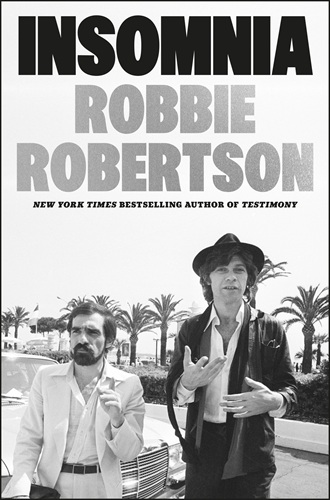
I had a dream that I was in New Orleans with Robert De Niro, Harvey Keitel, and Jake LaMotta. We all watched Muhammad Ali wear down Joe Frazier at the Superdome before heading off to a bar where we ran into Tony Curtis…
Wait a minute, that’s no dream, it’s the opening of “Insomnia” by Robbie Robertson (Penguin 2025), a sequel of sorts to his 2016 memoir, “Testimony”. The visit to New Orleans comes at the end of the actual story but opens the book, setting the tone for what follows. And make no mistake, a memoir that begins with Jake LaMotta threatening to crush Tony Curtis’ face is a book about blokes, a buddy story, the self-styled Rock and Roll odd couple. Robbie Robertson and Martin Scorsese’s adventures in the late 70s are no secret. In Peter Suskind’s “Easy Riders, Raging Bulls”, Sandy Weintraub says, ‘It’s a shame that Marty wasn’t gay. The best relationship he ever had was with Robbie Robertson.’ Probably the most fun too. “Insomnia” outlines the period when Robbie moved into Marty’s Mullholland house and the two partied with Jack Nicholson, watched old movies, caroused with starlets, hoovered industrial amounts of blow, and ate like kings, courtesy of Francis Ford Coppola’s chef, Dan. You will hear Robbie’s voice while you read. He was a great storyteller and these bad boy adventures are served up in his usual wry manner. If you are looking for music content, there are only a few glimpses in between assignations with Jennifer O’Neill, Tuesday Weld, Geneviève Bujold, and many, many others. In the background is the end of The Band. His relationship with Levon is on life support and Richard Manuel’s drinking is getting even more serious. The story of how Out Of The Blue was written and recorded grabbed me – one of my favourite Band songs – and I wanted more. If you are a fan of The Last Waltz film (and who isn’t?), there is plenty here about how it was all put together. As the notches on Robbie’s guitar strap mounted up, I kept asking myself why I was reading it. I guess the answer is obvious. It was just good to hear that voice again. Tony Thompson (Jan 2026)
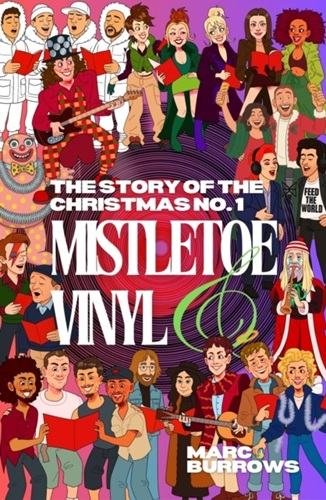
It’s a story that involves rioting against Wombles, dirty deeds by corporate giants, an Irishman taking on the world, the world taking on Simon Cowell, some of the worst songs ever committed to vinyl – and some of the very best. “The Story Of The Christmas No.1” by Marc Burrows (McNidder & Grace, 2025) is a joyful, affectionate exploration of a uniquely British cultural institution: the annual scramble for the Christmas chart top spot. More than a nostalgic celebration of festive pop, the book reveals a rich tapestry of social history and national identity. Burrows roots his narrative in the longer tradition of Christmas music but focuses most of his engaging account on the era when glam rock turned the Christmas No. 1 into a serious contest, right through to today’s world of social-media campaigns and streaming. His writing is light yet meticulously researched; he balances humour and heartfelt homage with enough detail to satisfy both music lovers and cultural historians. A particular strength is his archival work – trawling not just the music ‘inkies’ like NME and Melody Maker but local papers too. Who knew the Cheshire Observer would, forty years later, shed fresh light on Frankie Goes to Hollywood? These insights, alongside a wealth of surprising anecdotes, bring the quirks and unpredictability of the festive chart battle vividly to life. Occasionally, though, the book’s cultural and historical strengths sit alongside geographical slips: Reading is relocated to Middlesex, while George Michael becomes an Essex boy. Still, this is as much a book about how Britain celebrates Christmas as it is about music – a communal ritual grounded in shared memories, broadcasts, and record shops. Quibbles over geography aside, it’s a warm, witty, and engaging read for anyone who has ever argued about what should be the Christmas No.1. A genuine treat, and an ideal stocking filler. Mike Press (Dec 2025)
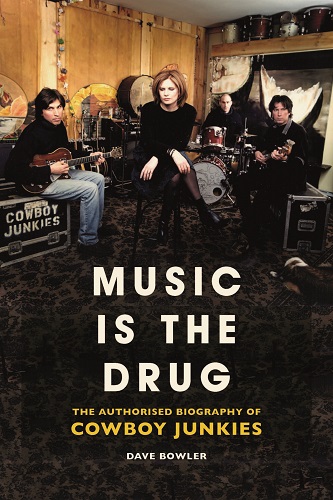
I used to maintain a blog where I reviewed books about music. It was fun but I started to lose heart when so many memoirs were either score settling diatribes – ‘the worst drummer I’ve ever worked with’ – or cliché fests – ‘then I saw Elvis on tv and everything changed.’ Biographies were better but many seemed to favour salacious gossip over detail about the artist’s actual work. This is a long-winded way of saying that “Music Is The Drug: The Authorised Biography of Cowboy Junkies” by Dave Bowler (Omnibus, 2021) doesn’t fall into any of those disappointing camps. He spent 15 years interviewing band members, side musicians, producers, friends, fans, and family members to produce this cracker of a band biography. He digs deep into the music, the lyrics, and the somewhat curious career of a band that might be described as the best kept secret in rock and roll. ‘Authorised’ biographies can suggest a sanitised version of the story but in this case, it means a good relationship with the band and access to the key players. Bowler, whose current day job seems to be chief historian at West Bromwich Albion FC (this will mean something to UK readers presumably), is a stickler for detail. I love reading about how albums are recorded so I was hooked when I learned that the band’s first two albums were recorded with a single Calrec Ambisonic microphone. This isn’t to say that it’s a book for wonks only. If you are curious about how a band that includes three siblings has stayed together for so long – no small feat in rock and roll – he does all that stuff too. Omnibus probably took a chance with this one but I’m glad they did. It’s the right book for the right band. For those new to the Cowboy Junkies, there is plenty here about music in general and life in a working rock and roll band. They toured with Townes Van Zandt … How’s that for a teaser?! Tony Thompson (Nov 2025)
Victor Wooten’s 2008 book “The Music Lesson: A Spiritual Search for Growth Through Music” (Berkley Books) is a captivating parable that transcends traditional instruction manuals, weaving a narrative around a young musician’s encounters with an enigmatic mentor named Michael. It explores themes of groove, improvisation, and the interconnectedness of music and life, urging readers to listen beyond notes to the soul of sound. I like it for its blend of storytelling, humour, and profound insights. In it, Victor (‘The Jimi Hendrix of bass’) uses the story to introduce the reader to concepts of music and teaching. As a musician and instrument teacher I found much to chew on. A couple of the ideas that resonated with me: teachers don’t teach – students learn. When the student is ready, the teacher will appear. Ideas such as what are the basics of music get explored: it’s much more than rhythm, melody and harmony. And Victor points out that we don’t teach children the alphabet then the rules of grammar then teach them to speak. Children speak and learn from speaking with and listening to others. Why don’t we do the same with music? The enigma that is Michael – is he based on a real character? – makes the book far more than a philosophical treatise on the practice of music. The novel has a range of characters who are interesting but Michael is the key. I recommend listening to the audiobook, which has a wonderful soundtrack composed and played by the author in the background while Victor and a small cast read the book in character. Although I don’t agree with everything he posits, he certainly argues his case well. And it has improved my understanding of teaching and the art of playing music. Thoroughly recommend. David Lewis (Nov 2025)
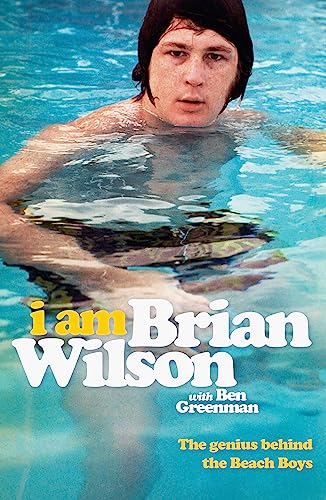
“I Am Brian Wilson” by Brian Wilson with Ben Greenman (Coronet, 2016). The front cover blurb reads “I am Brian Wilson. The genius behind the Beach Boys”. He was born in California, sung about California and never moved for long away from California. His geographical world was a surprisingly local one; he gave California a sun and surf mythology that has become part of its character. Brian freely admits he was never much of a surfer. He wasn’t a great one for the beach at all as his skin was sensitive to the sun and he had to keep covered up. Neither were cars and hot rods of particular interest, other than he liked driving a car like any young man. Of the three brothers, Brian and Carl were the most musical. Dennis was the only real surfer. Brian finds it difficult to talk of his father, a violent abusive man, who he tries to defend as well as condemn. The mixed messages from this moody, sometimes generous/sometimes cruel individual were probably worse than if he’d been an out and out monster, at least the brothers would have known where they were with him. This is an honest and revealing book, well edited and put together, with lots of interesting facts emerging to hold your interest throughout. It captures the modest personality of a troubled genius. And like his music it moves you in a way that isn’t always easy to explain. Paul F. Newman (Oct 2025)
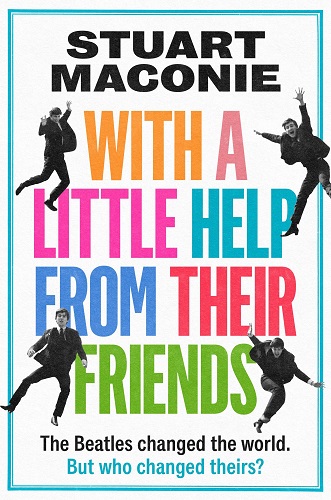
Paul McCartney once said, “We’re a community, majority vote, up the workers and all that stuff.” Inspiring words – except they weren’t his at all, but Alun Owen’s, the scriptwriter of A Hard Day’s Night. Owen is one of the hundred figures celebrated in Stuart Maconie’s latest book “With A Little Help From Their Friends: The Beatles changed the world. But who changed theirs?” (Harper North, 2025), a reminder that The Beatles were never a closed shop. They thrived on outside ideas, unexpected influences, and the right people turning up at the right moment – and Maconie has gone in search of those people. If you’re not a die-hard Beatles completist, you might ask whether the world really needs another book about them. But that’s not the question. The real question is: Do we need another book by Stuart Maconie? The answer is an unqualified yes. Maconie is a masterful storyteller who can make us see places, people, music, and culture from fresh, surprising angles – and this volume proves it once again.
Here are a hundred short, engaging portraits from the Beatles’ extended cast. Some are instantly recognisable – Jane Asher, Tariq Ali, Peter Blake. Others are gloriously obscure – the calypsonian Lord Woodbine, for instance – and many come from the band’s own intimate circles: family members, school friends, ex-bandmates, partners, and the indispensable “other Fab Four” who kept the whole enterprise rolling – George, Brian, Mal, and Neil. Nor was it a boys’ club, as the vital contributions of Mona, Astrid, Maureen, Freda and others make clear. “All great myths need a great monster,” writes Maconie, as he unveils the subject of his final chapter. The result is a vivid portrait of a rich, diverse creative ecosystem. Maconie writes with his trademark wit, warmth, and unerring eye for human detail. It’s a labour of love, a joy to read, and a gentle reminder that even the biggest legends still need a little help from their friends. Mike Press (Oct 2025)

In their bright frocks, chunky monkey boots and boyish haircuts, the vivacious postpunk hopefuls Dolly Mixture were hard to miss around town in late-70s Cambridge. I’d occasionally bump into their bassist and frontwoman Debsey Wykes, who lived a couple of doors down from my girlfriend, at gigs and house-parties. Now, almost 50 years on, Debsey is ready to tell her story. Teenage Daydream: We are the Girls Who Play in a Band (New Modern, 2025) is a brilliant, honest, at times hilarious read. Drawing in part on her well-kept teenage diaries and fan letters, Debsey charts her own musical youth from those first fist-fumbled power chords (as she puts it) in the spring of 1978, to the Dolly Mixture’s eventual split in the early 80s. Along the way she recalls best mates, bookings at London clubs (they were even supported by an embryonic U2 for a couple of gigs), backing Captain Sensible on Top of the Pops, and how the Dollys were briefly championed by the Modfather himself, Paul Weller, eventually signing to his Respond label. Success seemed only a beat away. Ultimately though, Cambridge’s finest girl group had to settle for airplay on the John Peel show and a devoted cult audience. But in a way that’s the story. Not every band makes it big. Back then there were few all-female bands but namechecked here are the Mo-dettes, who I remember were also terrific live, and the Gymslips, who supported the Dollys on tour. It’s worth noting though that the pioneering Dolly Mixture predated them both. Debsey was in it for all the right reasons and her infectious lo-fi pop still jangles down through the years. Scooting through the bittersweet Teenage Daydream brings it all back for me. If you have any interest in indie and punk from the 70s and 80s, read this book. Rob Webb (Sep 2025)
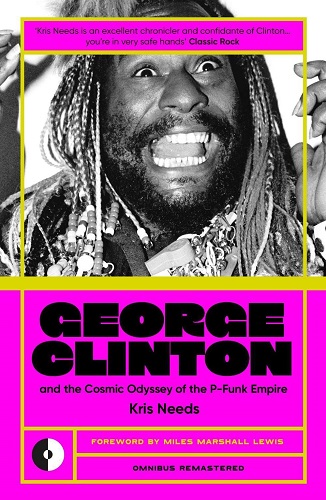
With “George Clinton and the Cosmic Odyssey of the P-Funk Empire” (Omnibus Press, 2024 edition), author Kris Needs plots Clinton’s journey from 1950s doo-wop into funk pioneer right through to his influence on the early hip-hop scene. This is less a Clinton biography and far more a deep dive into the funk family tree as the rolling cast of members in his empire are all introduced and followed as they branch off into their own various side projects. Needs is a Clinton superfan whose enthusiasm for his subject shines through and ensures that even the most obscure work from the P-Funk alumni is given due attention. As he states in his introduction “It’s hard to imagine what life would have been without P-Funk or how music might have ended up today.” This is the great strength of the book as it almost demands the creation of an ever-growing list of records to discover. Adding to the track-by-track analysis of much of Clinton’s discography are first hand accounts taken from interviews with the man himself as well as collaborators and friends. They paint a picture of a chaotic, drug fuelled whirl of creativity all pulled together by the vision and pioneering spirit of Clinton. So fascinating a character is Clinton that one book would struggle to do him total justice and I’m sure there is space for another book to delve into his remarkable, one-of-a-kind personality, but as a record of his work and influence Needs ticks all the boxes. John Laking (Sep 2025)
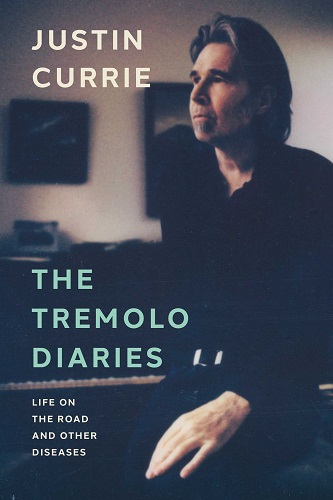
Justin Currie’s Parkinson’s diagnosis came as a massive shock to me. I no longer have to imagine how big a shock it was to Justin as he has written this book, “The Tremolo Diaries: Life On The Road And Other Diseases” (New Modern, 2025). We are introduced early to The Ghastly Affliction and learn of the diagnosis. Also, to Gavin, a shaky right hand who along with Justin is the main character in this unlikely buddy story. His appearances are unwelcome, unannounced and unrelenting. Part one as Del Amitri trek across the US as support to Barenaked Ladies from enormodome to enormodome is essentially a tour guide. Part two takes us to Europe as support to Simple Minds. Through more recognisable towns and cities Justin still manages to draw a smile or a tear, a guffaw or a pang of pain and frustration. I haven’t travelled much, hardly at all. I now want to start. As a travel guide the book gets 5 stars. We learn that touring with a band is mind-numbingly dull, repetitive and bleak except for the time spent on stage. Unless of course you’re fighting an errant and unpredictable right hand. So, as well as regaling us with tales of locals, mega stores, museums (lots of museums), art galleries (lots of art galleries), eateries (lots of eateries) and the gigs, we learn of the impact of Parkinson’s disease on a person who happens to be a successful (yes you are Justin, despite your protestations) professional musician. Justin Currie has always written about the shit side of life, love and loss with brutal honesty in his songs. This book, this diary, this opus, this confessional, this therapy session, whatever it is, takes it to another level. Writing this honest, and this exposing, doesn’t come along often. Dave Ross (Aug 2025 – for a longer appraisal of The Tremolo Diaries visit Dave’s website.)
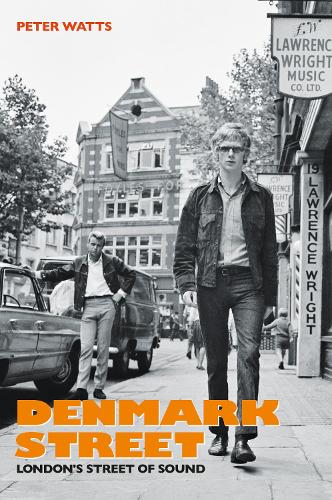
Peter Watts’ Denmark Street (Paradise Road, 2023) tells the story of one of Britain’s most iconic musical thoroughfares. Known as Tin Pan Alley, Denmark Street was once a hive of music publishers, demo studios, and publicists. The Sex Pistols lived there, the Rolling Stones recorded there, and David Bowie camped out in the back of a converted ambulance. Melody Maker was founded on the street, the NME launched Britain’s first music chart there, and in an office at the end of the road, The Beatles signed the contract that ultimately lost them their songs. Watts captures these and many other stories in a richly layered history told with flair and precision. Blending archival research, personal anecdotes, and interviews with musicians, producers, and industry insiders, the book charts how this small Soho street became the engine room of British pop. Watts traces its evolution from a hub of sheet music sales in the early 20th century to its creative heyday in the 1960s and 70s. What sets this book apart – and is a real highlight – is Watts’ sensitivity to the street’s changing fortunes, particularly in the face of gentrification and redevelopment. His writing is affectionate but never sentimental, handling the cultural significance of Denmark Street with journalistic rigour and a touch of melancholy. A wonderful read for anyone curious about the history behind the sounds that shaped a nation. Mike Press (Aug 2025)
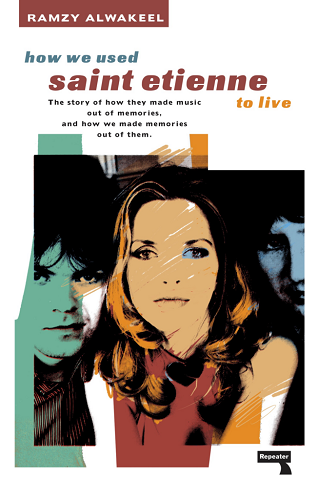
A celebration of “three people who really love pop music”, Ramzy Alwakeel’s “How We Used Saint Etienne To Live” (Repeater Books, 2022) pays effusive tribute to Bob Stanley, Pete Wiggs and Sarah Cracknell – those advocates of “persistent melody, evocative storytelling, dry humour and laser-precise arrangements”. Long-time fan Alwakeel opens with a charming origin story – he reveals that he first discovered Saint Etienne during Britpop’s zenith via the inclusion of their luminescent infidelity banger He’s On The Phone on Now That’s What I Call Music! 33. This feels entirely appropriate, given SE founder member and pop obsessive Bob Stanley has pinpointed receiving Benny Hill’s “Ernie (The Fastest Milkman in the West)” as a Christmas gift in 1971 as an entry point for his own subsequent Damascene conversion. Placing these Home Counties pop sages in the lineage of pre-WW2 American song-gatherer Alan Lomax and hip-hop’s cut n’ mixers via their trademark synthesis of 60s aesthetic and modernist sensibility, Alwakeel contemplates the enduring appeal of Saint Etienne’s three and a half decades’ worth of negotiating memory and a sense of place via a singular approach to disinterring archive sound, neatly described here as an unswerving ability to “use the past in a way that could only be contemporary”. With Saint Etienne’s forthcoming LP being described as “their final album-length statement”, we end with a lengthy inventory of the author’s most cherished St Et acquisitions: an apt conclusion for a book dedicated to a group who, in Stanley’s own words, were “born out of a love of records”. Matt Tomiak (Jul 2025)

I love books that place music in the context of social history – and if they include maps, that’s an added bonus. Aniefiok Ekpoudom’s Where We Come From: Rap, Home And Hope In Modern Britain (Faber & Faber, 2023) provides both. This compelling social history explores the evolution of UK rap and grime, offering a vivid account of the vibrant scenes in South London, Birmingham, and South Wales. Ekpoudom highlights the diverse communities that have shaped the music in these regions. Rather than focusing on mainstream figures, the book shines a light on lesser-known artists such as Cadet, Astroid Boys, and Despa Robinson. Through their stories, Ekpoudom illustrates how rap and grime have given voice to marginalised communities, reflecting their struggles, resilience, and aspirations. His writing is both lyrical and empathetic, skilfully weaving personal narratives with broader socio-cultural analysis. He traces the roots of these genres back to the post-Windrush era, linking them to the everyday experiences of Black and working-class Britons. This is a readable and illuminating book that ties music to a strong sense of place. It is as much about the history of these locations and their communities as it is about the music they produce. A vital contribution to understanding the people’s music of modern Britain. Mike Press (Jul 2025)

I first met Jakko in the late 1970s when he fronted a band with the enigmatic name 64 Spoons. Who’s The Boy With The Lovely Hair? The Unlikely Memoir Of Jakko M. Jakszyk (Kingmaker Publishing, 2024) tells the story of his childhood, his quest for his birth parents, his musical journey and how he met and worked with his musical heroes – up to and including (spoiler alert) Robert Fripp and joining King Crimson as vocalist and second guitarist. I have to declare an interest. I have Jakko’s solo albums, the 64 Spoons album, and the King Crimson triple CD collection Live in Vienna on which he sings. The narrative takes some unexpected twists and opens with a conversation with his American stepbrother, which I read twice with incredulity before moving into the book itself. Having said all that, there is some social commentary about growing up in the Watford area in the 1960s and having adoptive parents neither of whom had English as their first language. His father was Polish and his mother French. The revelation close to the end of the book reveals the source of its title and I won’t spoil that for you. The book was published in late 2024 and I read it over four days between Christmas and New Year. Jakko is a fine storyteller, he makes you smile, he makes you laugh out loud, he makes your eyebrows raise in surprise and in passages, brings a lump to your throat. There is an impending CD to accompany the book called Son Of Glen with music that I believe that Jakko was inspired to write while researching and writing the book. Ian Ashleigh (Jun 2025)

Heartbreak Is The National Anthem: How Taylor Swift Reinvented Pop Music by Rob Sheffield (Harper Collins, 2024) in which the long-time Rolling Stone staffer provides a droll, spirited fan’s eye view of Taylor’s dizzying rise to global supremacy. And what a ride it is. In Heartbreak Is The National Anthem we follow her career from preternaturally assured adolescent, personally delivering home demos to the country music bigwigs along Nashville’s renowned Music Row, via feuds, mass fandom and eventually the gargantuan success – or “Taypocalypse” – of the world-conquering Eras Tour. Memorably encapsulating her appeal to legions of young admirers (think, Sheffield tells us, “The Beatles times Motown times Bruce Springsteen times Britney times strawberry ice cream …”), he deploys an Anglophile 80s pop prism – there are namechecks for Morrissey, Paul Morley and the first Depeche Mode LP – to frame Swift’s work, reminding us of the mind-blowingly high standards that she’s maintained throughout an Imperial Phase that’s now, remarkably, approaching a full two decades. Matt Tomiak (May 2025)

