
| Track | Album |
|---|---|
| Unbroken Ones | Grand Necropolitan |
| Straying Away | Grand Necropolitan |
| The Ghost Of Limehouse Cut | Black River Falls |
| Payday | Black River Falls |
| And Springtime Followed Summer | The Sky’s Awful Blue |
| Three Rusty Reivers | The Sky’s Awful Blue |
| Rat Poison Rendezvous | Foburg |
| Shipman Memorial | Rancho Tetrahedron |
| The Copper Beech | Song Of Co-Aklan |
| Song Of Co-Aklan | Song Of Co-Aklan |
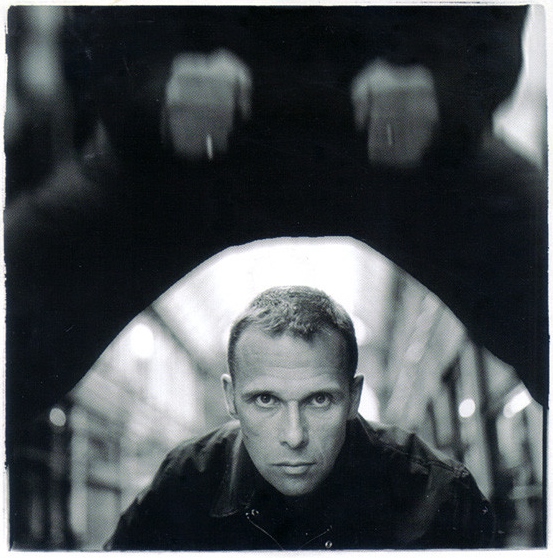
Cathal Coughlan first came to prominence with the indie bands, Microdisney (for more about them, stay tuned to this station) and Fatima Mansions (for more about the history of that band, see Steve Parker’s excellent Toppermost). During his time with both bands, he established himself as a very fine songwriter and a highly effective, if unorthodox, frontman. In the first of these groups, he shared the songwriting responsibilities with Sean O’Hagan, whose more pop-oriented sensibility and skills as a writer perfectly complemented his own more acerbic style. With Fatima Mansions, Coughlan was freer to unleash his own blend of – to use Steve Parker’s words – “bile and venom”. The group’s break up in 1995 was partly due to legal disputes which Coughlan had with their record company in the US, Radioactive Records. The repercussions from this continued for the rest of that decade and meant that his first solo album, Grand Necropolitan, had only a very limited release. Indeed, its distribution was so restricted that Coughlan referred to it as his ‘secret release’.
My two selections from Grand Necropolitan, Unbroken Ones and Straying Away, have an ambient lushness and shimmering quality which is unusual in Coughlan’s work. Unbroken Ones also features one of his finest vocal performances. His singing on the track also reveals the debt he owed to one of his major influences, Scott Walker.
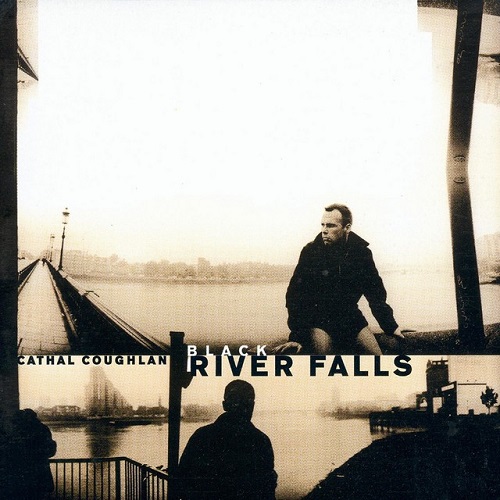
His second solo album, Black River Falls, first released on Cooking Vinyl in 1999, is a more immediately accessible record than Necropolitan. The first pick from it, The Ghost Of Limehouse Cut is a vaguely Brechtian/Dylanesque ballad which showcases some typically caustic, brilliant lyrics by Coughlan. At the time some of these might have appeared overly cynical (especially the lines about the politician-character in the song) but now they appear to be uncomfortably close to the bone.
By contrast, Payday from the same album features one of his finest melodies. It is also one of the best songs about the shocking quality of the sudden realisation of our own mortality that comes to us when close contemporaries die. As one of my relatives once put it, it is at those moments that we become aware of the fact that we have reached ‘the top shelf’. There are also some lovely poetic lines in the song (such as regret unpacks its bags and settles down to stay and gliding through the city’s sunless pause).
Despite the sustained musical excellence of the album, however, its relatively muted character meant that it was always unlikely to make much of a commercial breakthrough. Indeed, whereas both Microdisney and Fatima Mansions had threatened to break through into some level of commercial success, it had by now become clear that, at least as a solo artist, Cathal Coughlan was unlikely ever to move beyond ‘cult’ status, This also meant that, for the remainder of his solo career, he was to change record labels regularly, usually working with relatively small ones with restricted resources and very limited distribution.
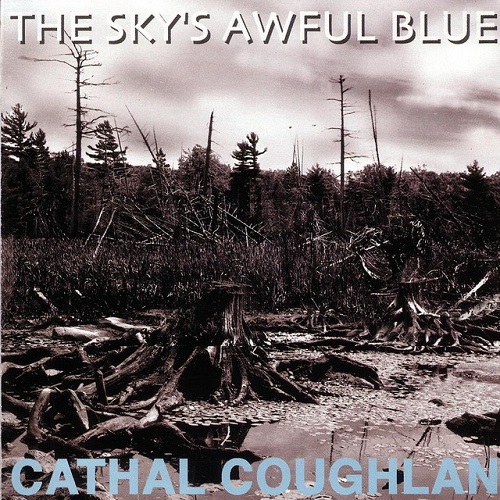
While the drawbacks to this situation were clear, it also meant that he was free to make the music that he wanted to without the pressures to compromise, which would have come if he had signed to a major label. This freedom to experiment was clearly displayed in his third solo album, The Sky’s Awful Blue, which appeared on his ownBeneath Musiclabel. From it, my first choice is the darkly atmospheric and brooding And Springtime Followed Summer. For me at least, the song also has a bleak simplicity which is reminiscent of some of the late great Mark Lanegan’s best work.
In its sardonic humour and starkness, the next pick, the folk-flavoured Three Rusty Reivers, almost resembles a Beckett play transposed into a song.
Coughlan’s ‘savage indignation’ at social, political and governmental corruption – an anger which he shared with a series of Irish writers going back at least to Jonathan Swift – is clearly apparent in my next two selections, Shipman Memorial and Rat Poison Rendezvous. Very few songwriters have matched the kind of clear-sighted fury he demonstrates in such songs. This anger is combined with a keen empathy for those who suffer as a result of such misbehaviour by elites.
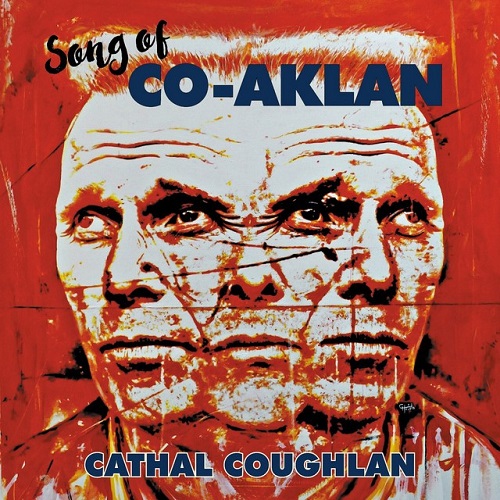
Sadly, Cathal’s final solo album, Song Of Co-Aklan, revealed an artist still at the peak of his powers. It also featured walk-on parts by many figures from his past, including Sean O’Hagan from Microdisney and Aindrias O’Gruama from Fatima Mansions. Their appearance on the record also gave added force to its ruminations on ageing and the transience of life. This theme is best addressed perhaps in The Copper Beech, which also features one of Coughlan’s finest melodies.
Conversely, the title song, with its brilliant free association-style lyric, is a full-on attack on the inanity of modern life and contemporary politics. Its synth-pop flavour also shows that Coughlan was still open to new musical ideas even at this late stage in his career.
After a lengthy struggle with cancer, Cathal Coughlan died at the age of 61 in May 2022. Despite his relatively early death, he left behind a rich musical legacy (both through his solo work and his earlier recordings with Microdisney and Fatima Mansions) which many musicians with longer careers would struggle to emulate. Throughout his career, he also retained a rare integrity and a deep-seated commitment to his art. He also stands in the very front rank of Irish ‘indie’ musicians and is in a class of his own among them as a lyricist.
Bonus Track
Will conclude with this great – if rather spooky – cover of David Bowie’s Lazarus, which was captured on video during a rehearsal for the Bowie tribute show, Lady Stardust, curated by Camille O’Sullivan in 2018.
The Strange World Of… Cathal Coughlan (A Quietus Interview)
Interview by Siobhán Kane (Winter Papers)
Interview by Killian Laher (No More Workhorse)
Interview by Paula Farr (Silent Radio)
Interview in East Belfast Observer (2004)
Interview by Malcolm Wyatt (2021)
Great Irish Albums Revisited – Black River Falls
Cathal Coughlan: The Last Word (Blackpool Sentinel)
A Man Out Of Time by Brian F. Cousins (Perfect Sound Forever)
Toppermost #1,114: The Fatima Mansions
Andrew Shields is a freelance historian, who grew up in the West of Ireland and currently lives in Sydney, Australia. Along with an interest in history, politics and literature, his other principal occupations are listening to and reading about the music of Bob Dylan and, in more recent years, immersing himself in the often brilliant and unduly neglected music of Phil Ochs.
TopperPost #1,175
 Tuck & Patti


What a tremendous artist. Start here and start digging. I doubt you’ll be disappointed.
David, thanks for this. There is so much fine music to be discovered in Cathal’s back catalogue. Realise I should also have mentioned his two excellent collaborative albums with Jacknife Lee as Telefís. He left behind such a huge legacy.
That’s a good read there (“clear-sighted fury” is a really accurate description) and an impeccable selection of tracks, all of which I’d still have thought even if you hadn’t said nice things about my Fatima Mansions piece (thanks) 🙂
Thanks for the kind words Steve. Cathal’s music is a good example of the truth of Johnny’s statement that ‘anger is an energy’ – especially, when – as Cathal almost always did – it is directed against the right targets. Just this morning Spotify told me that ‘Unbroken Ones’ was my most listened to song this year. It showed that he could also write in an extremely tender and delicate way. A unique artist in so many respects…